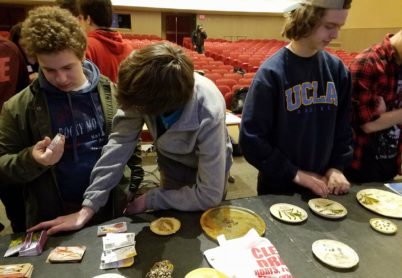
February 28, 2018 brought together two schools and 14 students to learn more about aquatic invasive species (AIS) and solar energy. The day started out with a presentation from Allison Gamble, Invasive Species Specialist with the Minnesota DNR. Allison explained that there are non-native organisms and there are invasive organisms and the difference between the two. Many AIS have been introduced
YES! Alumni Spotlight: Karin Davey
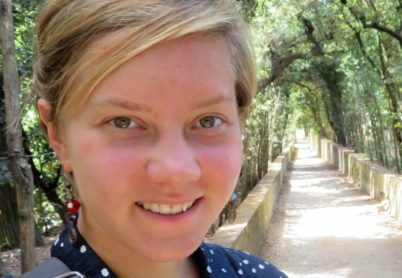
We recently caught up with Karin Davey, an alumna of the YES! team at Mankato West High School from 2012-2014. While on the YES! team, Karin worked with her team members to get the school cafeteria to switch from disposable Styrofoam lunch trays to reusable ones. Karin notes, “we had a lot of fun with that project, even though it was quite a lot of work. We saved all the (rather disgusting) trays
YES! Teams Hear About Energy Conservation and Climate Change
Written and submitted by Michelle Isaacson, Southern YES! Coordinator On the blustery morning of February 1, 2018, twenty-three students filled in the meeting room at Gustavus Adolphus College (https://gustavus.edu) to spend the day learning more about Energy Conservation and Climate Change. Our speaker for the day, Jenna Totz from Climate Generation, (https://www.climategen.org)
Water is Life, Treat it Right at Prairie Woods ELC
Written and submitted by Ali Dahmes, YES! Coordinator On Tuesday, February 6th, 2018, 30 students and their coaches from New London-Spicer Middle School (NL-S), Atwater-Cosmos-Grove City (ACGC), and NL-S High School YES! teams came together to learn about water quality, best management practices, and aquatic invasive species at Prairie Woods Environmental Learning Center. Dylan
YES! Announces McKnight Foundation Project Funding Winners
Written and submitted by Ali Dahmes, West Central Coordinator On January 25, 2018, the Youth Energy Summit (YES!) Program announced the 2018 winners of the McKnight Foundation Project Funding. Funding was awarded to teams whose projects engage and empower youth to make an impact in their school and/or community on climate change through hands-on projects. Through a competitive
Bird Feeder
Written and Submitted by a YES! Student I’m making a bird feeder and I’m upcycling a bottle. The materials you will need is a bottle, bird seeds, string, and some wood. The estimated cost is $10 or less. A skill that I want to learn from this is that we can use bottles instead of wood.